Skip to content
Level Group
  • Level Consulting
    • Market Intelligence
    • Material Registration
    • ESG for Procurement
    • Global Sourcing
    • Real Estate Projects
    • Sania
    • Project PMO
    • Alternative Agricultural Parts
    • Supply Chain Restructuring
    • Outsourced Services
      • Telecom
        • Contract Analysis
      • Energy
      • Specialty Gases
    • Sourcing & Strategic Sourcing
    • Spend Assessment
  • Management Level
    • Banian
    • Contracts
    • Environmental Management
    • Suppliers
    • Contractor Management
    • Fleets
  • BPO
    • Procurement Outsourcing
    • Financial Outsourcing
  • Digital Level
    • blueEz e-Procurement
    • Digital Assessment
    • Electronic Auctions
    • Process Automation
    • ProcureOn
  • Level Academy
    • About
    • Webinars on Artificial Intelligence
    • Distance Learning Courses
      • Platform Login
      • Procurement Course
        • Tax Impact on Procurement Decisions
        • Category Management in Procurement
        • Procurement KPIs
        • Digital Media for Buyers
        • Strategic Negotiation for Buyers
        • Agribusiness Procurement
        • Procurement Intelligence
        • Efficient Contract Management in Procurement
        • Agile Methods in Procurement
        • Supplier Relationship Management (SRM)
        • Strategic Sourcing
        • Customer Service in Procurement
        • Stakeholder Relationship Management
        • Demand, Supply, and Inventory Planning
        • Assertive Communication in Procurement – Essential
        • Assertive Communication in Procurement – Advanced
      • Technology Course
        • Cybersecurity
        • The DPO's Regulatory Responsibility
        • LGPD Applied to Supply Chain
      • Miscellaneous Courses
        • Master Data Management
        • Supplier Risk Management
        • Third-Party Risk Management
  • Blog
Contact

Innovation through Design

Design Thinking is an approach that has revolutionized the way we find innovative solutions to problems—creative solutions focused on real market needs rather than mere statistical assumptions.

Design Thinking

The Design Thinking approach seeks problem solving in a collective, collaborative way, fostering an empathic perspective with the stakeholders engaged in the process. In this concept, everyone involved with the idea is placed at the center of product development—an enriching effort when carried out with multidisciplinary teams.

During the Design Thinking process, the team works to map out the cultural experience, worldview, and processes integrated into individuals' lives, with the goal of gaining a broad perspective when solving challenges. This makes it easier to identify barriers and generate viable alternatives to overcome consumer pain points.

The more “human” approach can be applied to any business area where customer satisfaction—whether internal or external—can be achieved through an in-depth understanding of their needs, desires, and perceptions.


Stages of Design Thinking

The stages of Design Thinking can be summarized as follows:

1 - Identifying where to find innovation opportunities

During the panel “Innovation through Design”, designer Ronald Kapaz stated that Design Thinking represents corporate pauses for reflective processes that, through a pragmatic method, manage to generate innovation projects and their prioritizations. To achieve this, uncovering innovation opportunities must be done in a way that engages people from diverse backgrounds and information sources. It is essential to discover where the paths to innovate lie, but for this to happen, one must understand both oneself and the external environment.

From a business perspective, the team assigned to develop the Sprint must understand their strengths, competitors' weaknesses, and macroeconomic conditions, as well as conduct SWOT analyses, benchmarks, market research, and multidisciplinary meetings to identify the answers at this stage.

2 - Discovering the Innovation Opportunity

Qualitative research and working with Big Social Data solutions can indicate what opportunity the market is outlining for your business.

3 - Developing the Innovation Opportunity

Developing the product or service based on customer needs and perceived value. At this stage, we move past the Heuristic Process (aimed at finding solutions to a problem) to uncover the diagnosis and the Creative Process for generating product possibilities.

4 - Testing the ideas

An MVP (Minimum Viable Product) – For those unfamiliar, an MVP is the simplest version of a product that can be launched during a testing phase, aiming to verify, without major expenditures, whether the idea genuinely addresses the end consumer's needs.

5 - Implementing the solution

After testing yields positive feedback about your product, it is ready to be launched. It is important to understand that the product development process is ongoing, where your idea will be continuously improved through a collaborative process among all stakeholders involved with it.

Design Thinking for Diverse Areas

Design Thinking is used to uncover new paths through the perspective of the end consumer. These are some practical examples of how to apply this perspective across various areas and corporate functions:

  • Sales team: commercial teams can use techniques from this approach to develop powerful persuasion strategies;
  • Strategic core: can assist managers in finding entirely innovative solutions, without looking back at the past, but focusing on the current expectations and desires of the end consumer;
  • Brainstorming: stages of questioning, ideation, and prototyping can support the creative process.

We can observe that small and medium-sized enterprises have also been using this collaborative, practical, and multidisciplinary perspective to overcome their business challenges.
Leave a comment Cancel reply

Your email address will not be published. Required fields are marked with *

Recent posts

  • 8th Contractor and Supplier Management Forum
    The Impact of the 8th Forum on Contractor and Supplier Management
  • Level Group in Exame: Growth and Procurement Solutions
  • Level Group sponsors the Procurement Startup Challenge 2026
    Level Group sponsors the Procurement Startup Challenge 2026
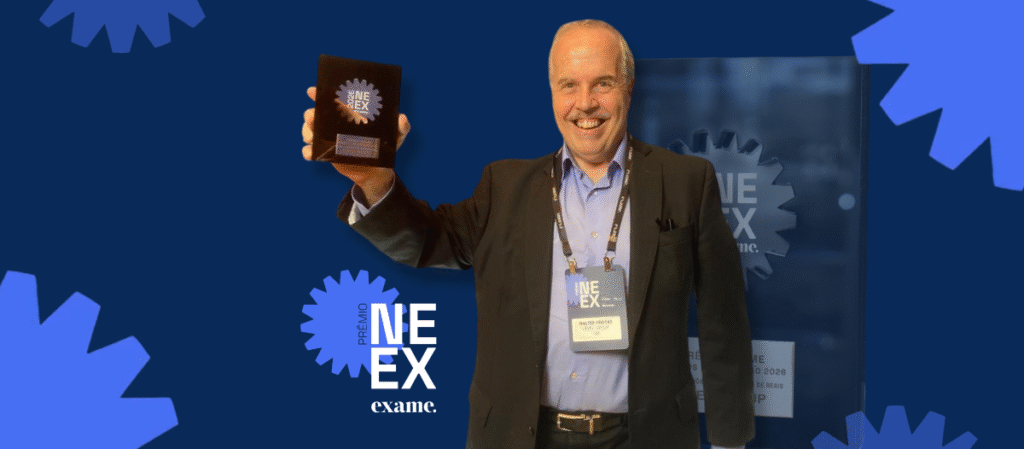
  • Level Group enters Exame's Negócios em Expansão ranking for the second time
    Level Group enters Exame's Negócios em Expansão ranking for the second time
  • 8th Third-Party and Supplier Management Survey
    The future of the industry: participate in the 8th Third-Party and Supplier Management Survey

Level Consulting

  • Market Intelligence
  • Material Master Data
  • ESG for Procurement
  • Global Sourcing
  • Real Estate
  • Sania
  • Project PMO
  • Supply Chain Restructuring
  • Specialty Gases
  • Sourcing & Strategic Sourcing
  • Spend Assessment
  • Market Intelligence
  • Material Master Data
  • ESG for Procurement
  • Global Sourcing
  • Real Estate
  • Sania
  • Project PMO
  • Supply Chain Restructuring
  • Specialty Gases
  • Sourcing & Strategic Sourcing
  • Spend Assessment

Level BPO

  • Procurement Outsourcing
  • Financial Outsourcing
  • Procurement Outsourcing
  • Financial Outsourcing

Digital Level

  • E-Procurement
  • Digital Assessment
  • Electronic Auctions
  • Process Automation
  • E-Procurement
  • Digital Assessment
  • Electronic Auctions
  • Process Automation

Management Level

  • Banian
  • Contracts
  • Environmental Management
  • Suppliers
  • Contractor Management
  • Fleets
  • Banian
  • Contracts
  • Environmental Management
  • Suppliers
  • Contractor Management
  • Fleets

Addresses

Trend Tower Building – 268 Copacabana Avenue – 6th floor (suites 601 to 605) Barueri –
São Paulo,
06472-001, Brazil

Dedicated contact for Third-Party and Supplier Management: (11) 3623-1610

Recife – Brazil
149 Derby Square – 11th floor
+55 (81) 2122-8120

2026 – All Rights Reserved ®
  • Blog
  • Whistleblower Channel
  • Careers
  • Privacy Policy
  • Press Office
  • Blog
  • Whistleblower Channel
  • Careers
  • Privacy Policy
  • Press Office
  • Português Brasileiro