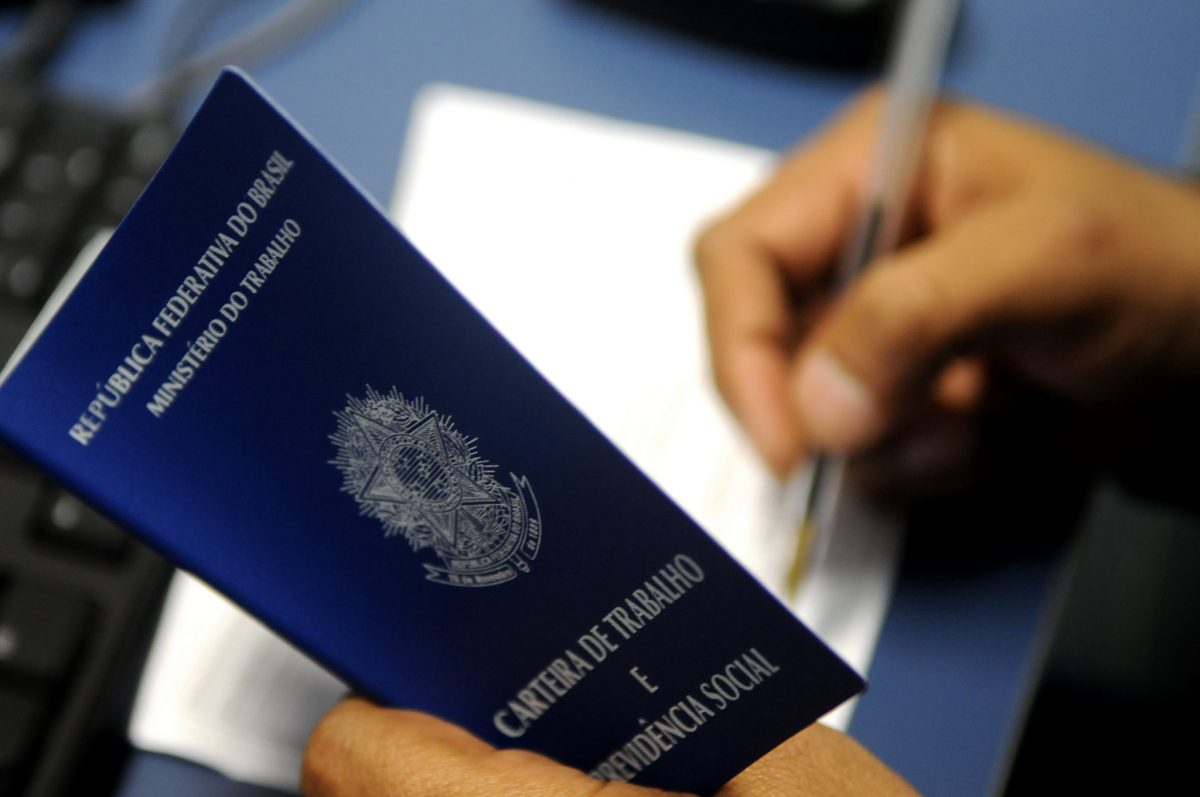
In November 2017, the new Labor Reform in Brazil came into effect. The Consolidation of Labor Laws (CLT), enacted through Law No. 13,467, amended several aspects of labor legislation. This brought numerous changes that affected employer-employee relationships. The legal text also revised other aspects regarding trade unions, as well as provisions governing legal issues arising from labor claims.
The Labor Reform in Brazil completed one year on November 11, 2018; bringing significant changes to labor relations.
In total, 54 articles were amended, 9 repealed, and 43 created. The labor reform in Brazil modified approximately 10% of Brazilian labor legislation, which has undergone changes since its creation in 1943.
We have listed some of the main changes and impacts brought about by the Labor Reform in Brazil after one year of implementation. Check it out.
Main changes and impacts brought about by the Labor Reform in Brazil
• Labor claims
Previous Law: The previous law did not require workers to pay the prevailing party's attorney's fees if they lost the lawsuit. There was also no fine for potential bad faith or court costs for failing to attend hearings.
New Law: Workers who fail to attend hearings or lose the lawsuit must pay court costs and the fees owed to the company's attorney. If the judge determines that they acted in bad faith, a fine and compensation payment are imposed.
What happened: Since December of last year, the number of new lawsuits in Labor Courts has been lower than in every month between January and November 2017. The number of labor claims filed from January to August 2018 was, on average, 36.5% lower than in the same period of 2017, according to the Superior Labor Court (TST). This resulted in lawsuits being filed with greater diligence, leading to an increase in favorable rulings in 90% of cases.
• Dismissal by mutual agreement
Previous Law: It did not exist. Before the reform, only individuals dismissed without cause could withdraw the FGTS deposited by the employer along with the 40% termination penalty on the total balance. Regarding advance notice, the company could notify the employee of the dismissal 30 days in advance or pay the corresponding month's salary without requiring the employee to work.
New Law: It became possible to reach an agreement upon contract termination, with payment of half the advance notice and half the 40% penalty on the FGTS (20%). The employee may also withdraw up to 80% of the balance deposited in the FGTS account. However, they are not entitled to unemployment insurance benefits.
What happened: In nearly one year, there were 125,621 mutually agreed terminations in the country, involving 108,687 establishments across 107,885 companies, according to data from the Ministry of Labor and Employment (MTE). The survey covers the period from November 2017, when the new law took effect, to September of this year.
• Claims for moral damages
Previous Law: There was no ceiling on the amount an employee could claim as compensation for moral damages from their employer.
New Law: With the reform, claims for compensation for moral damages were capped at a maximum of 50 times the employee's last salary. Furthermore, if the judge rules that bad faith occurred, the claimant may be fined 10% of the case value.
What happened: Immediately following the introduction of the reform, the number of claims related to moral damages plummeted. According to data provided by the TST, in the first month of the new law, claims totaled 81,507 cases. The following month, occurrences dropped to 15,596. Between January and September 2018, the number of new labor claims seeking moral damages fell 60% compared to the average of claims in the
same period of 2017, decreasing from 68,196 cases to 27,122 cases, according to TST data.
• Intermittent work
Previous Law: Labor law did not recognize intermittent work arrangements (performed in intervals, without regular hours).
New Law: Intermittent work is paid based on the period worked. The employer only summons the worker when there is demand. The worker can remain on standby at home for days, weeks, or even months, and will receive all benefits proportional to the hours worked. Workers are paid an hourly rate, which cannot be less than the minimum wage or lower than that of professionals performing the same role within the company.
What happened: So far, hiring under this model is well below the government's expectation of creating 2 million jobs in 3 years, or 55,000 positions per month. From November 2017, when the reform took effect, until September 2018, 47,100 positions were created under this modality. During this period, 11,200 intermittent positions were terminated, yielding a net balance of 35,000 jobs.
According to the General Registry of Employed and Unemployed Persons (Caged), in the year-to-date through September, the number of intermittent jobs created accounted for 6.5% of the total positions created nationwide (719,089).
• Union dues collection
Previous Law: The collection of union dues from formal employees was mandatory and deducted from payroll. The contribution was equivalent to one day's wages, deducted annually from the employee's compensation to sustain the trade union representing their category.
New Law: The payment of union dues, equivalent to one day's wages, is no longer mandatory. If the employee chooses to make the contribution, they must expressly authorize the deduction. The company can only execute the deduction with their permission.
What happened: Data from the Ministry of Labor shows that union dues collection plummeted 86% following the implementation of the new labor law, dropping from R$ 1.9 billion to R$ 276 million. Since late 2017, unions have taken legal action to maintain the mandatory fee, but the majority of lawsuits have been dismissed by the TST.
• Collective bargaining negotiations
New Law: Collective bargaining agreements may prevail over statutory law on certain points. This has introduced significant changes, but it has faced resistance from both employer organizations and employees.
What happened: With the end of mandatory union dues and new rules for working hours and vacations, collective agreements and conventions stalled during the first six months after the new reform took effect. In practice, the pace of negotiations finalized in 2018 began to pick up in early H2, but it remained 28.6% lower than in the same period of 2017, according to data from Salariômetro. The greatest hurdle to concluding negotiations was the abolition of mandatory union dues.

• Expected jobs
Previous situation: The unemployment rate stood at 12% in November 2017, when the new labor law took effect.
Expectation: The then Minister of Finance, Henrique Meirelles, estimated in October of last year that the labor reform would make it feasible to create over six million jobs in Brazil.
Current situation: The unemployment rate in Brazil stood at 11.6% in the quarter ended December of last year, affecting 12.2 million Brazilians, according to data published by the Brazilian Institute of Geography and Statistics (IBGE) in January 2019.
This rate indicates stability compared to the quarter ended November and a decline of 0.3 percentage points compared to Q3 (11.9%). In 2018, the average unemployment rate was 12.3%, down from 12.7% in 2017.
Therefore, employment recovery is expected to follow a gradual trajectory, matching the slow pace of economic recovery.
• Correction of distortions
Provisional Measure: It aimed to correct distortions in the new labor law. It challenged points in the law that created legal uncertainty and were deemed unconstitutional by legal scholars. The Provisional Measure introduced complementary rules regarding intermittent work, pregnant and lactating women in unhealthy environments, self-employed workers, as well as rules for 12-hour work shifts followed by 36 hours
of rest.
What happened: The provisional measure expired without being voted on, causing the adjustments that had already been introduced to become null and void.
Urgent Reforms
Brazil will face a series of challenges in 2019. According to Carlos Braga, Associate Professor at Fundação Dom Cabral and Visiting Professor at IMD (Switzerland), the new administration's ability to implement structural reforms will be tested amid a polarized political climate and a Congress characterized by party fragmentation.
Learn more about Brazil's Political and Economic Outlook for the 2019-2022 Term. Click here!
In addition, the fiscal position of several states is likely to worsen. The international landscape will be marked by increasing volatility and slower growth. The "honeymoon" period with the new government is short-lived. The new administration's actions will be judged on concrete outcomes regarding the structural reform agenda and technological disruptions to be embraced by the country.
Government plans to present new proposals to amend Labor Law
Established to assess the impacts of the 2017 labor law changes and propose further reforms, the Gaet – High-Level Labor Studies Group, formed by the current administration, is expected to submit new recommendations for labor legislation later this year. Gaet focuses on legal certainty, social security, labor economics, and trade union freedom.
Among the areas addressed in this new reform are:
- Changes to vacations
- Adjustments to working hours
- Adaptations to labor relations
- New format for union registration and dues
- The end of the single-union system, in addition to new formats for collective bargaining
Other points will be presented, but there are no details yet on what and how all the changes will take place. It is worth noting that they will be submitted to Congress for consideration and will only be approved upon a favorable vote by two-thirds of the deputies. Then it is the senators' turn. With a favorable opinion, the change proceeds to presidential sanction.